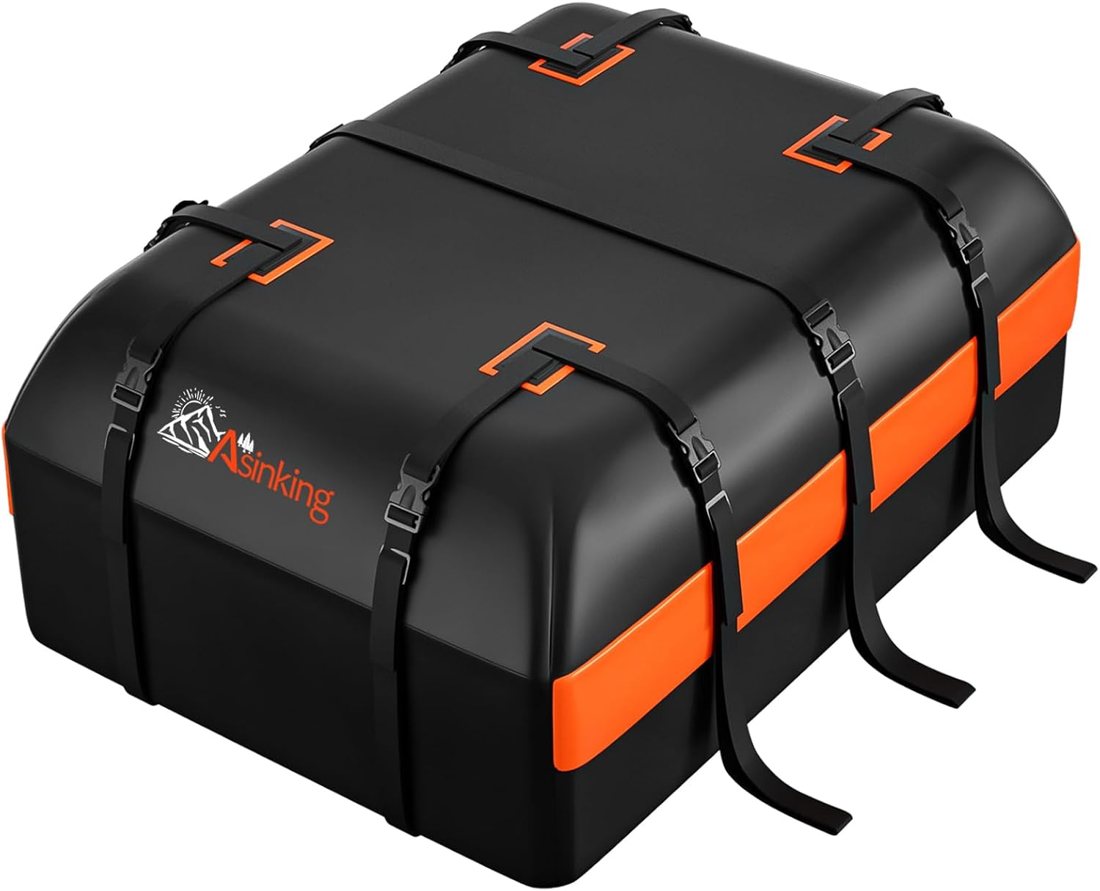
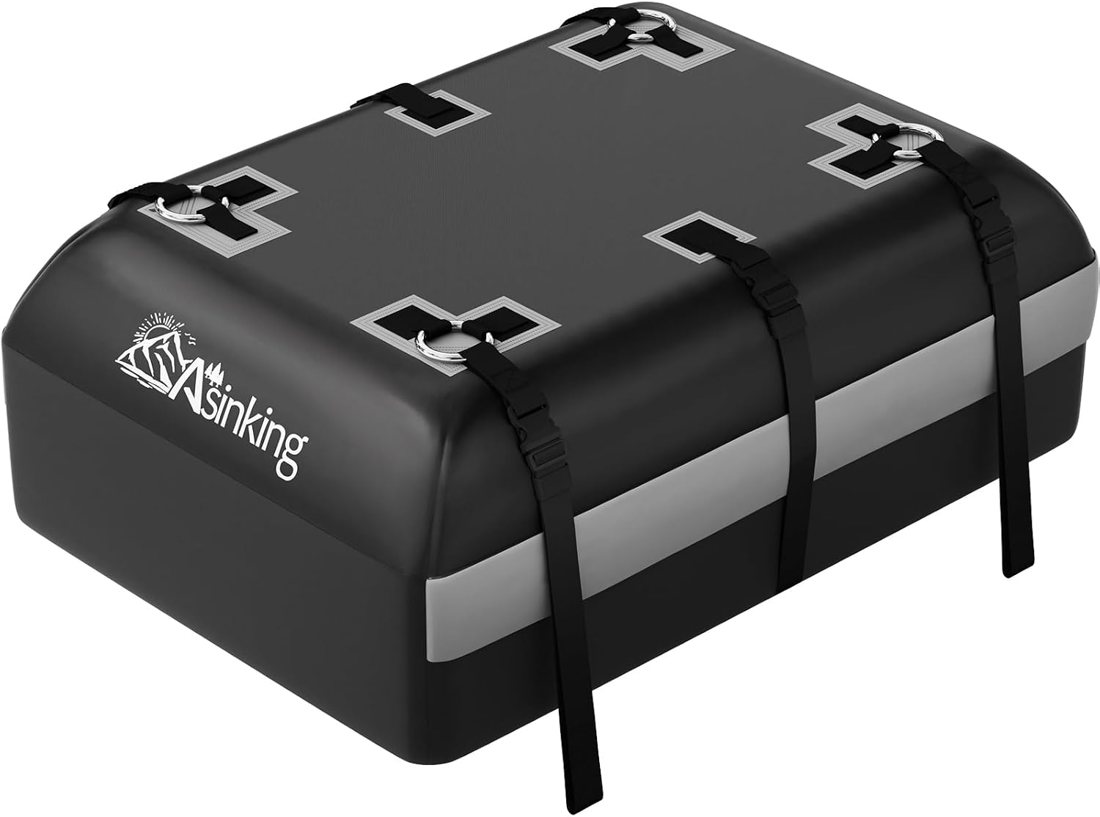
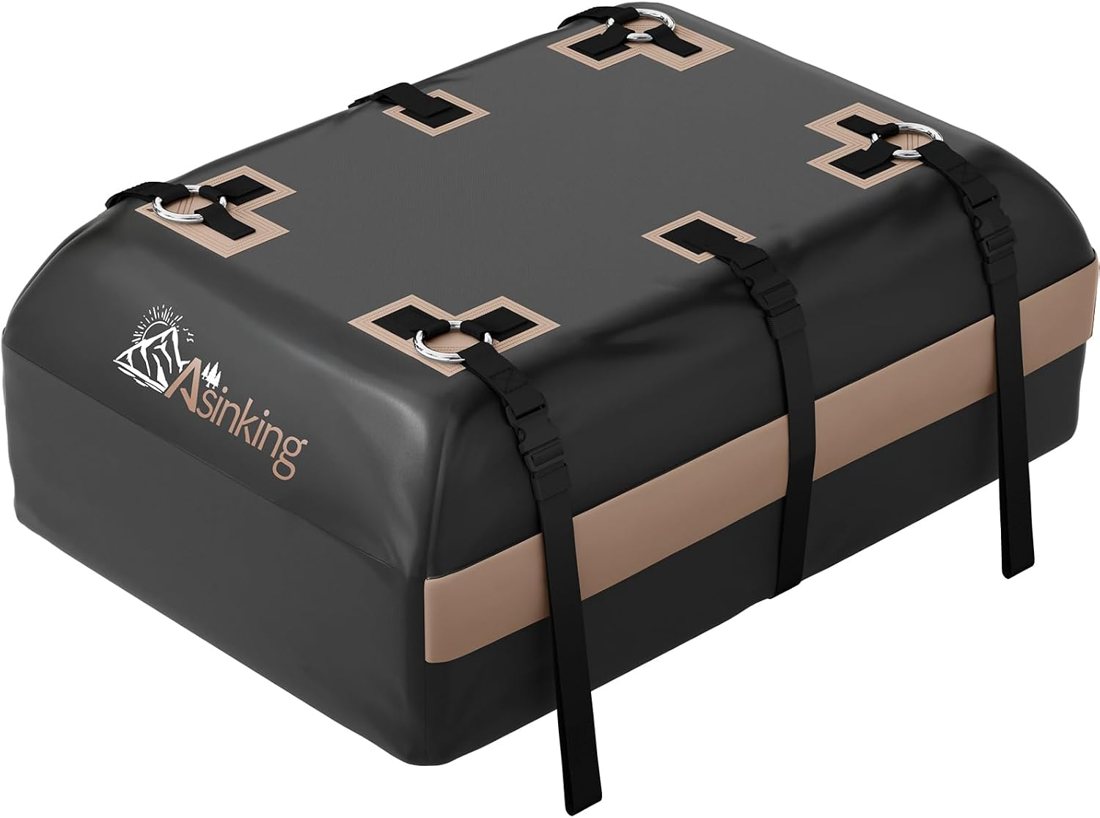
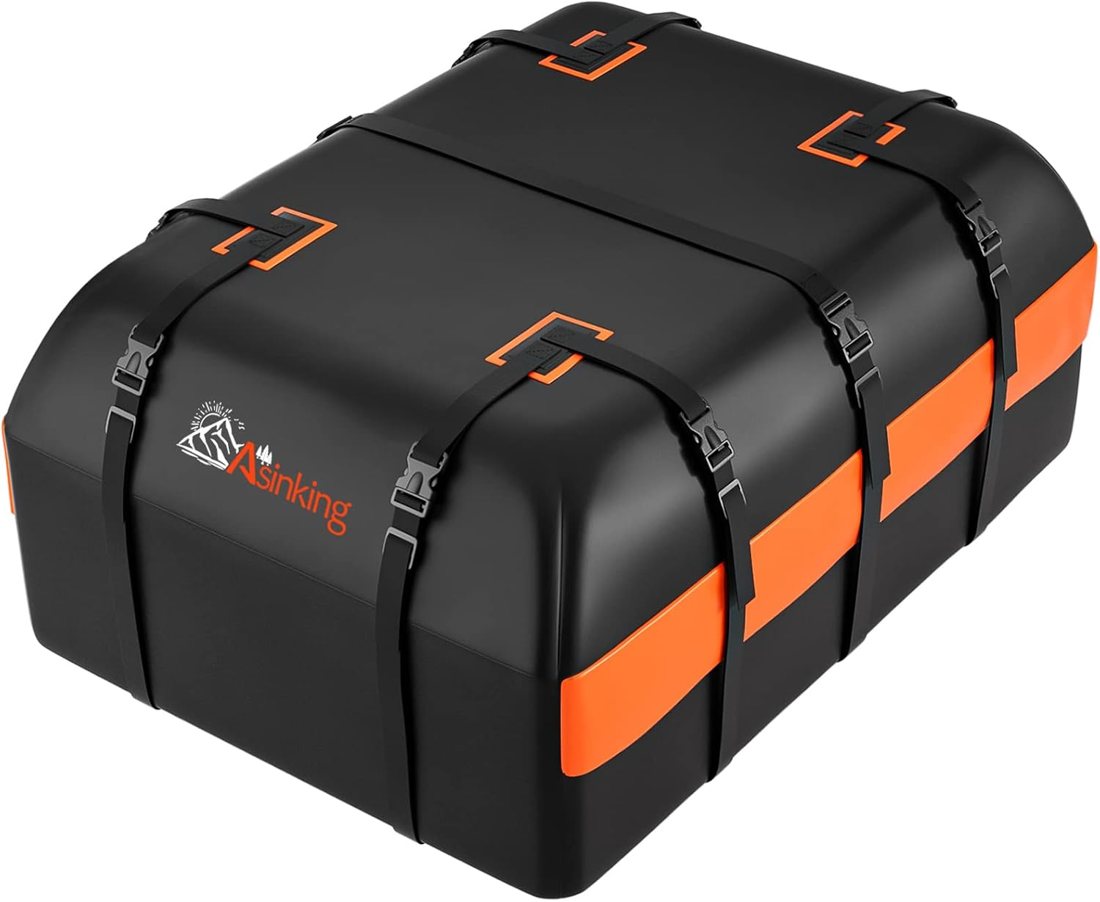
 21 cu ft

Drive with Ease · waterproof roof bags, with or without a rack

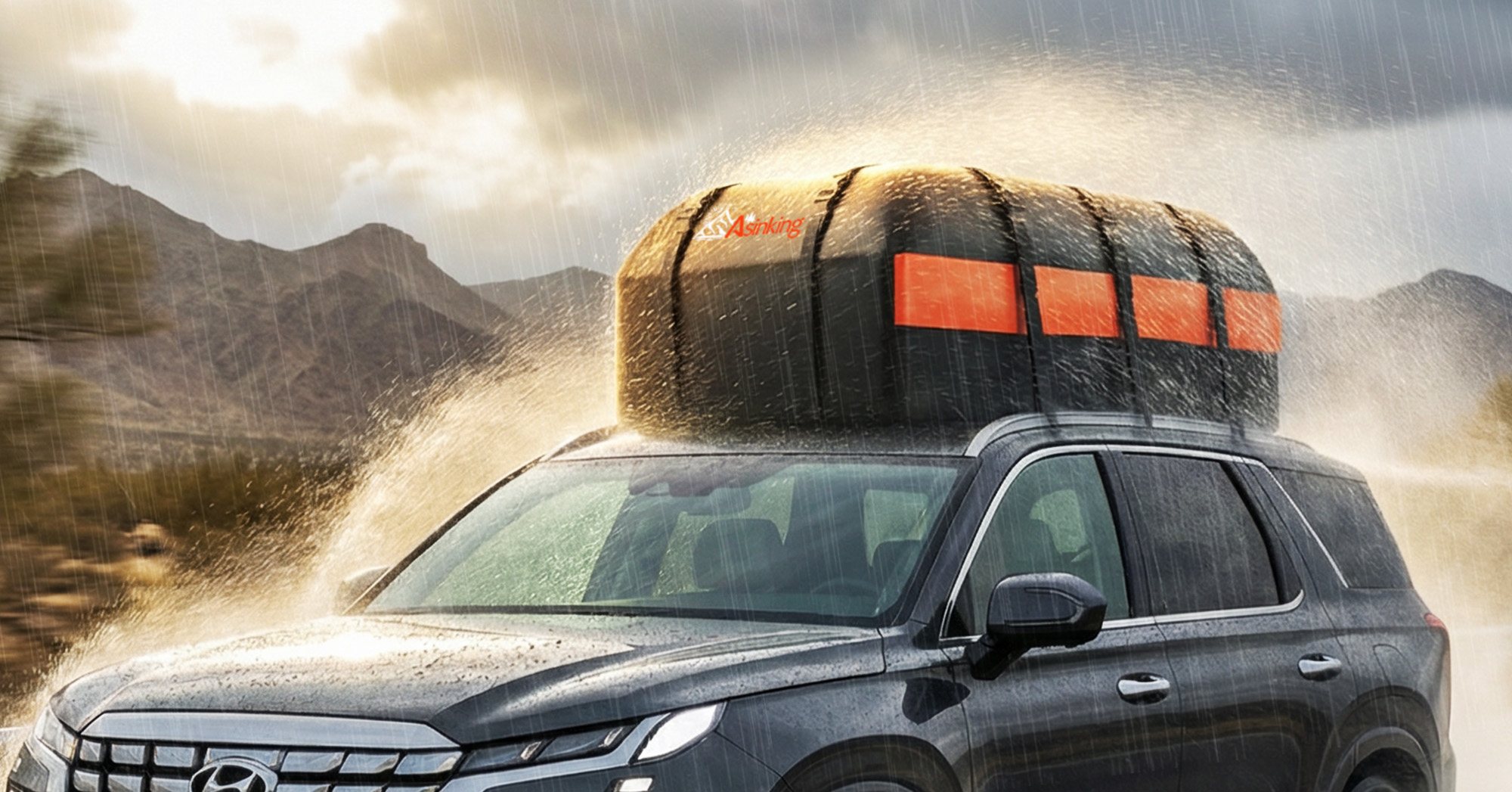
Waterproof roof bags that go on with or without a rack, so your gear rides up top and your family gets the back seat back.
Our story
We've spent ten years and more than a thousand small fixes on one idea: the stuff goes on the roof, and the people get to ride easy.

6 on this shelf
Our Ultimate Series is where every lesson from ten years of roof bags ends up.
Shop ultimate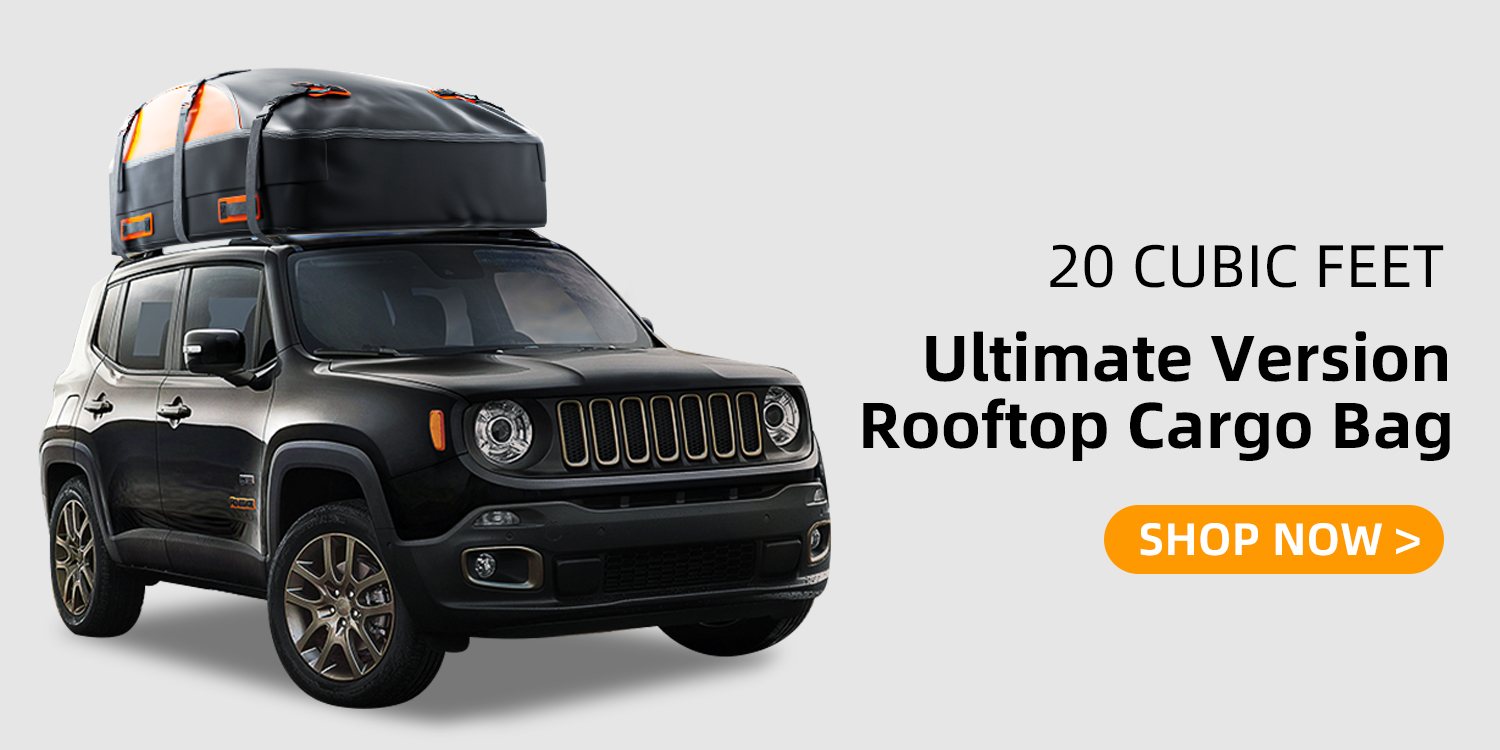
5 on this shelf
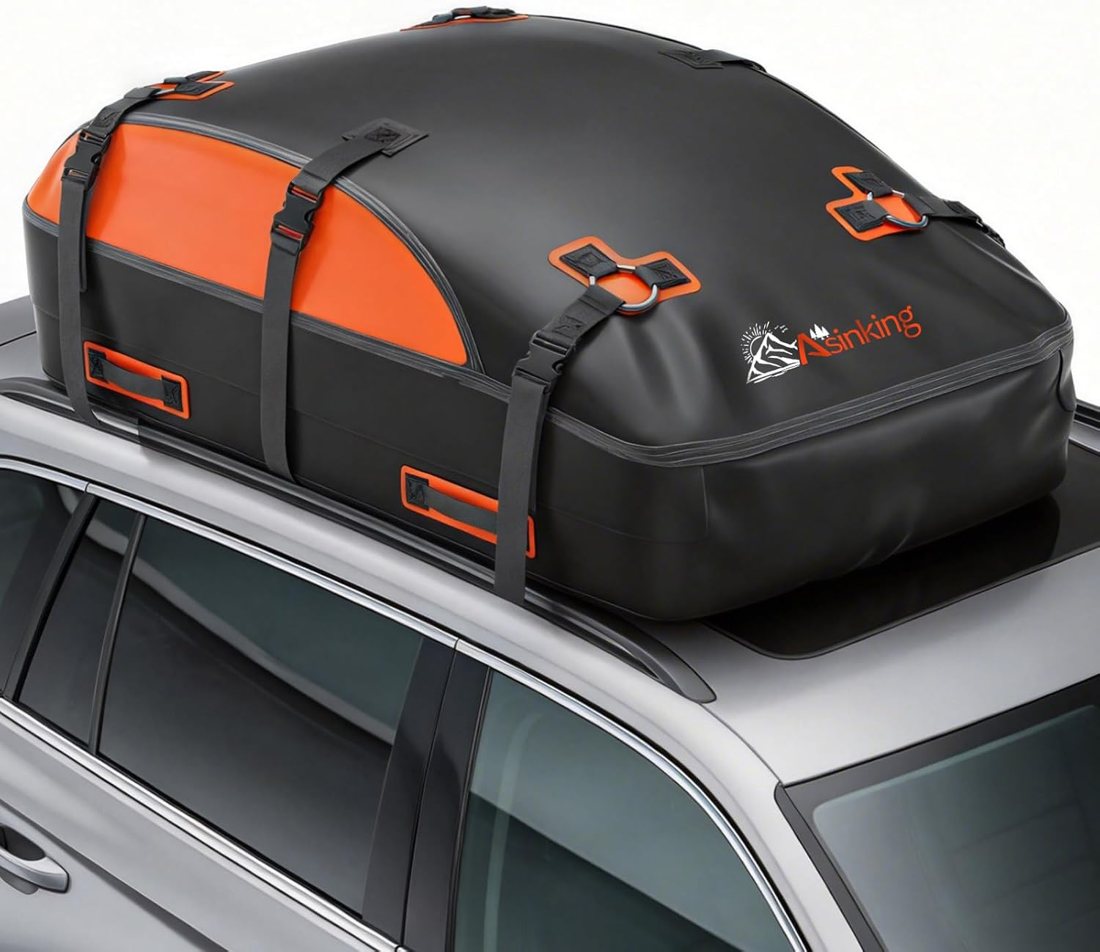
The Everyday Series is the bag most families start with, and the one with over three thousand shopper reviews behind it.
Shop everyday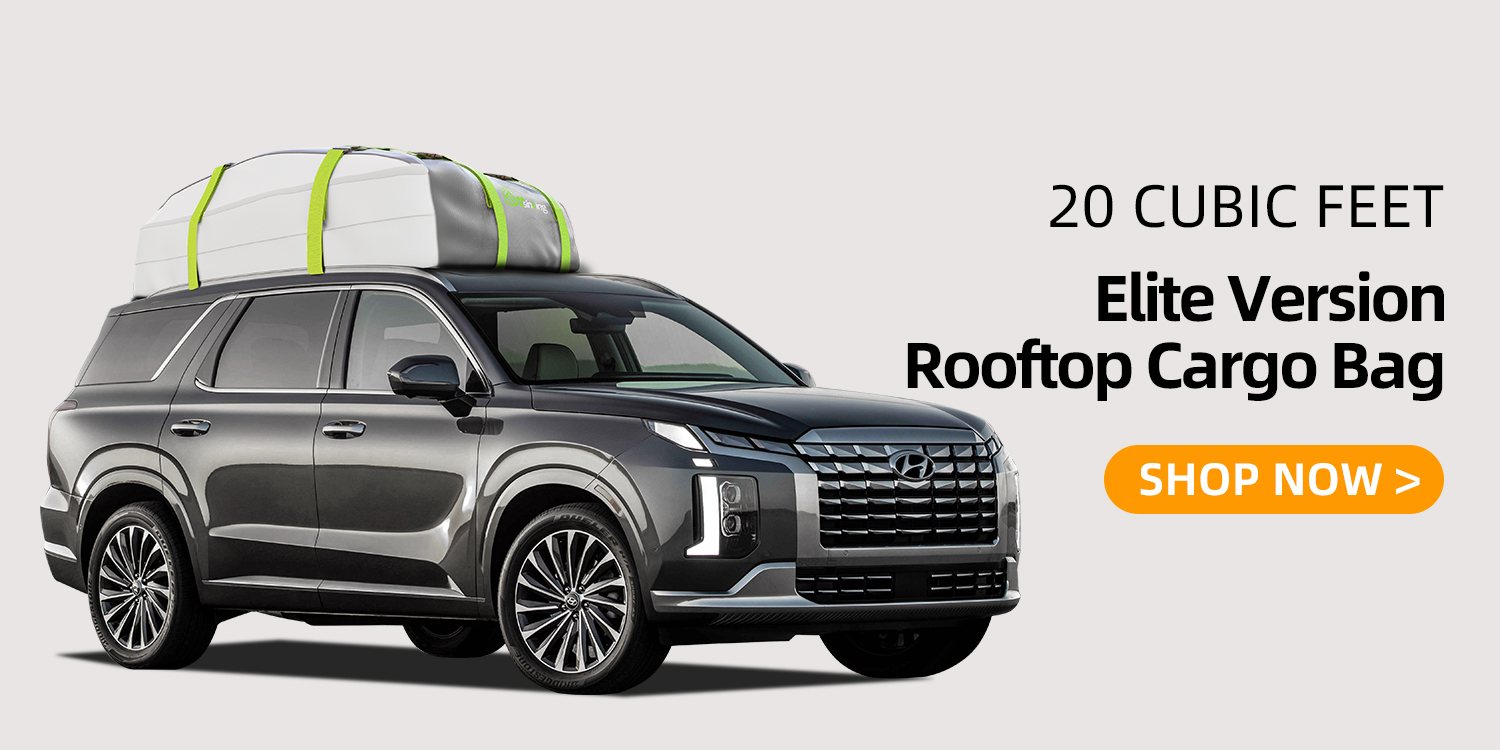

15 cubic feet sits inside a smaller roofline (it needs a roof longer than 50 in and wider than 36 in).
16 to 20 cubic feet is the sweet spot for most crossovers.
20 to 21 cubic feet: room for the whole family's duffels and a tent.
21 to 22 cubic feet for roofs longer than 58 in and wider than 42 in.
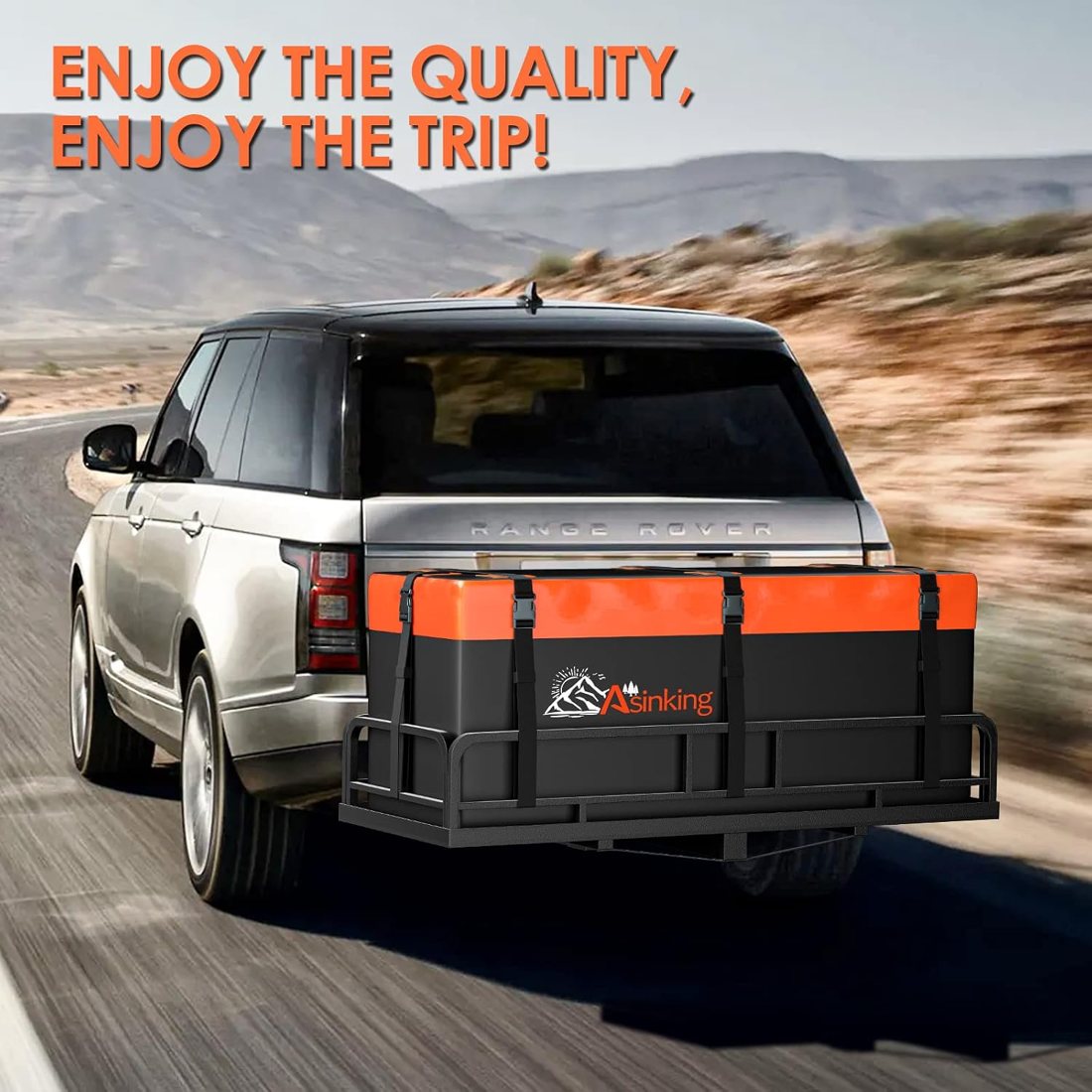
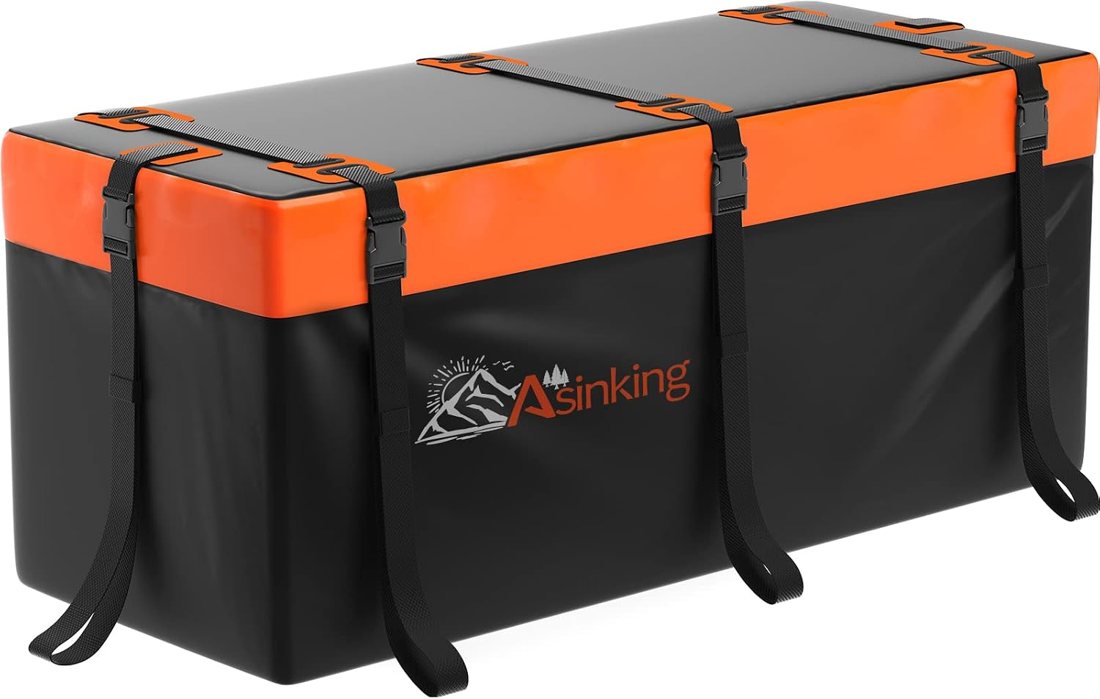
Bikes or a kayak up there? The hitch bag carries 20 cubic feet out back.
| Asinking | A bare-bones bag | |
|---|---|---|
| Door hooks for bare roofs | ||
| Welded, reinforced seams | ||
| Flap over the zipper | ||
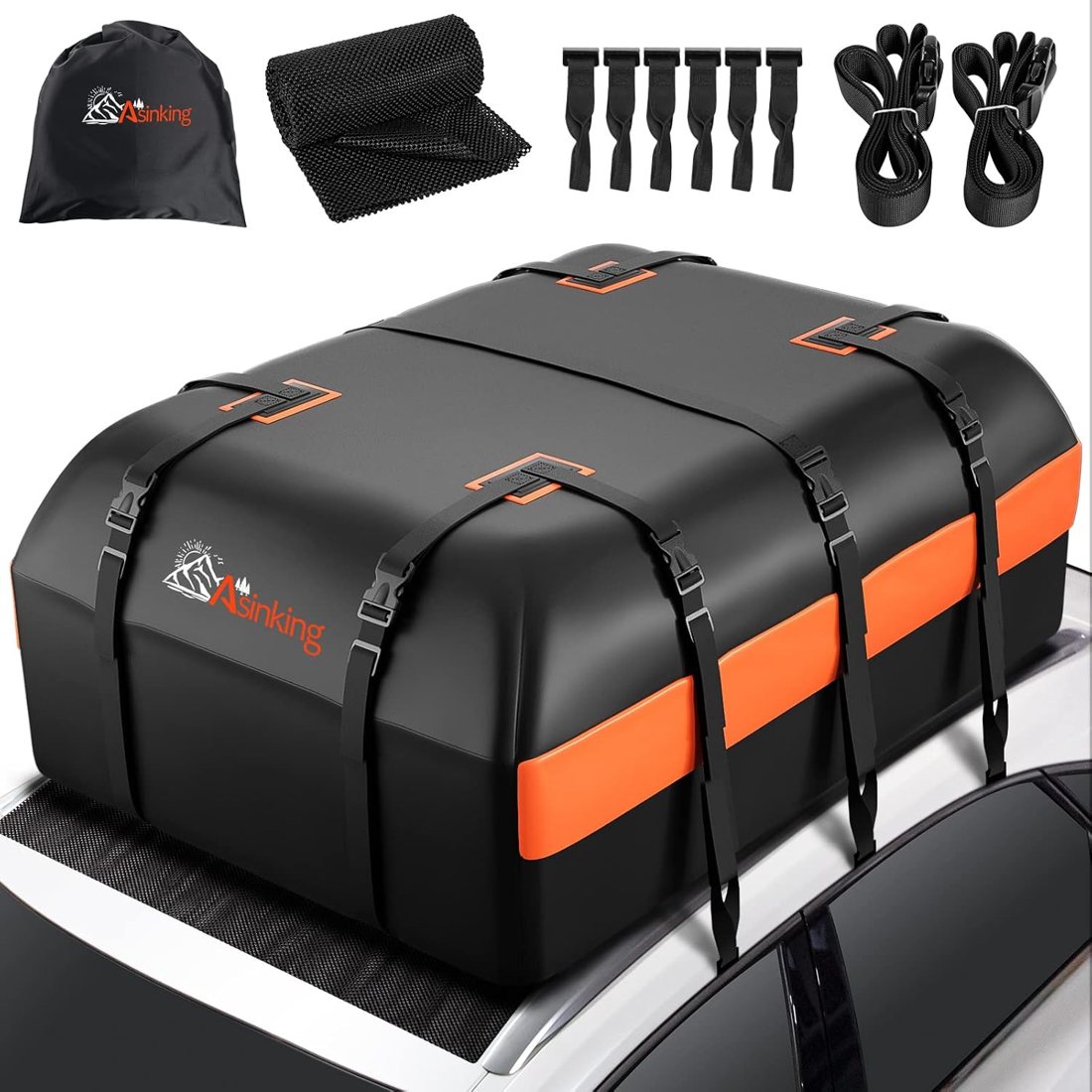
| Non-slip roof mat in the box | ||
| Combination lock in the box | ||
| Folds into its own storage bag |
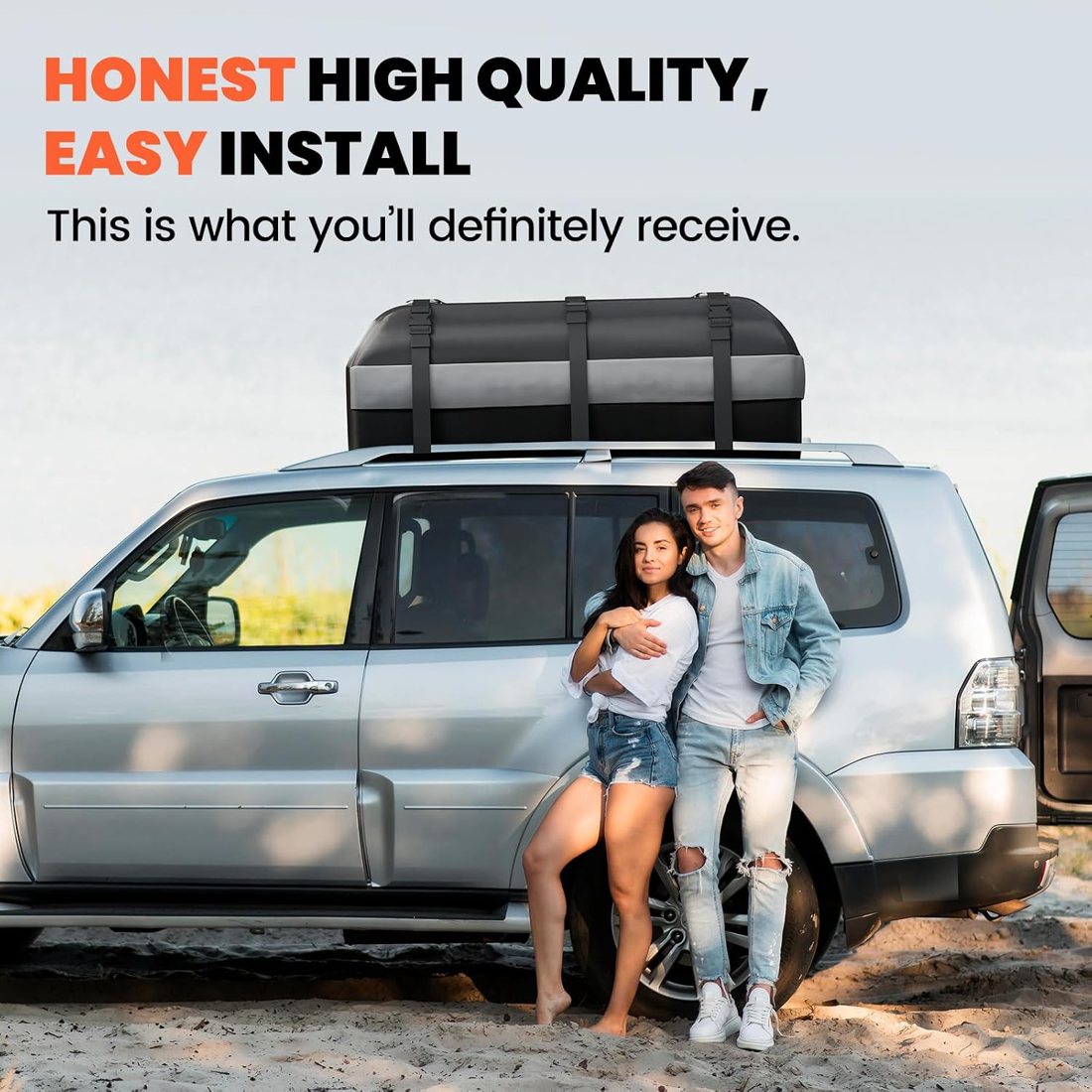
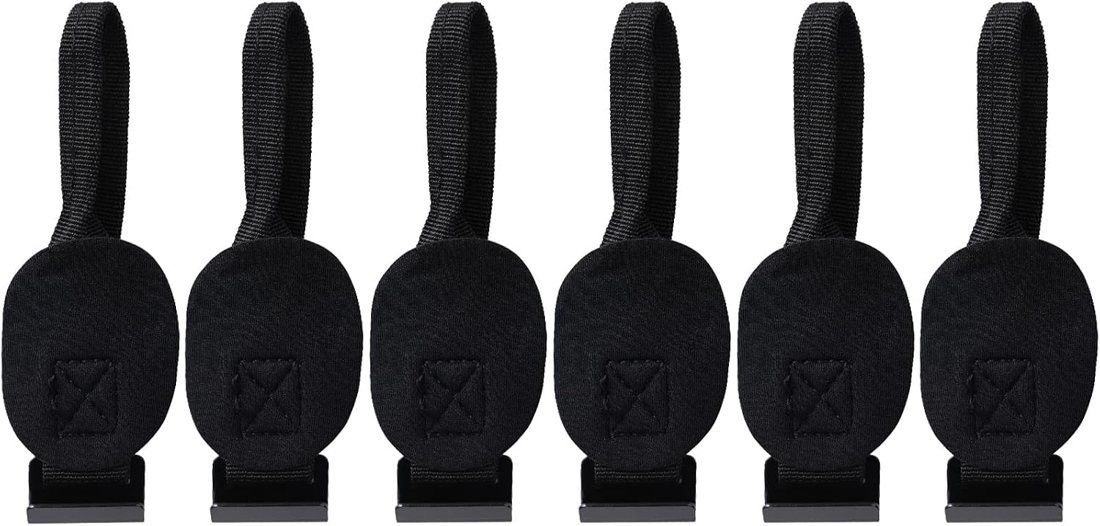
Door hooks for bare roofs, metal loop straps for racks. Lay the mat down, set the bag, hook, cinch and go.
From 15 to 22 cubic feet, up to four sleeping bags, four suitcases and two tents on the bigger bags.
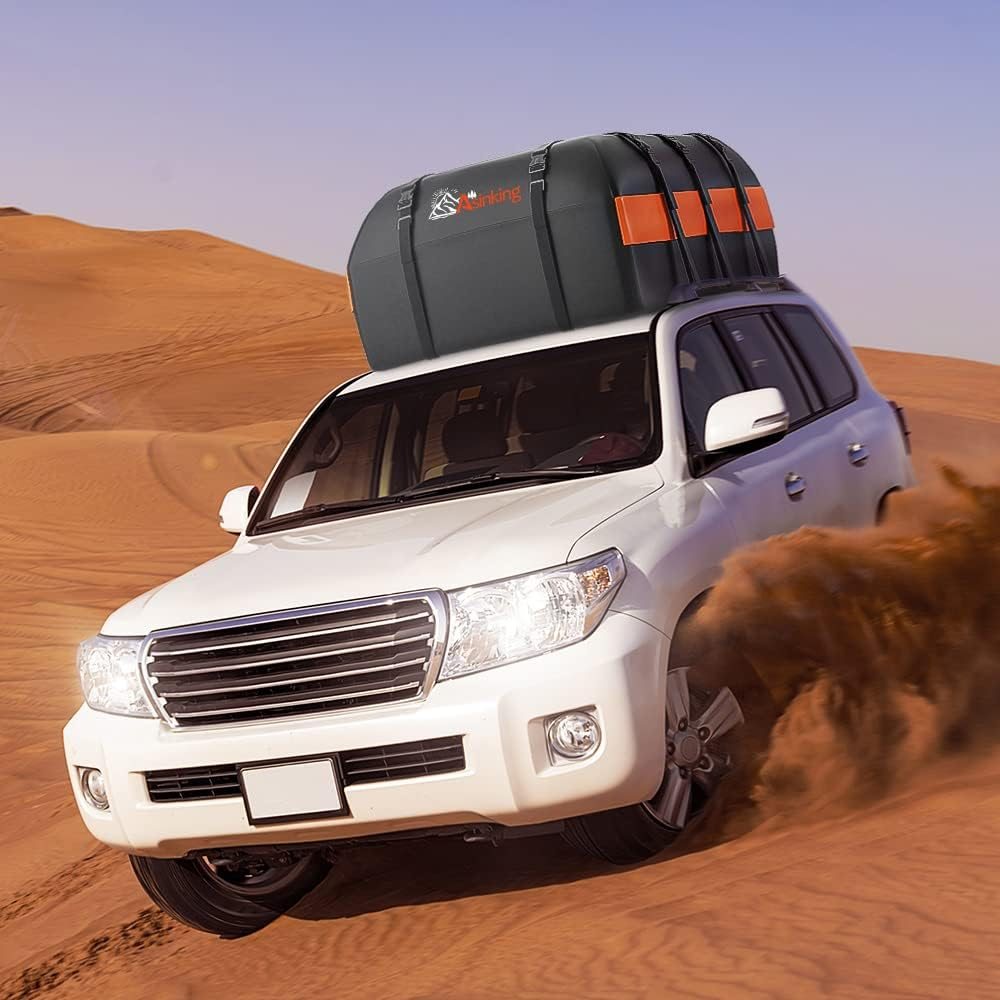
Straps and buckles sized for 70 to 80 mph, and shells that shrug off rain, snow and sun.
Lay the non-slip mat flat on a clean roof. It grips the bag and guards the paint.
Heavy, soft things in the middle, light things at the edges. Zip it closed and fold the flap over.
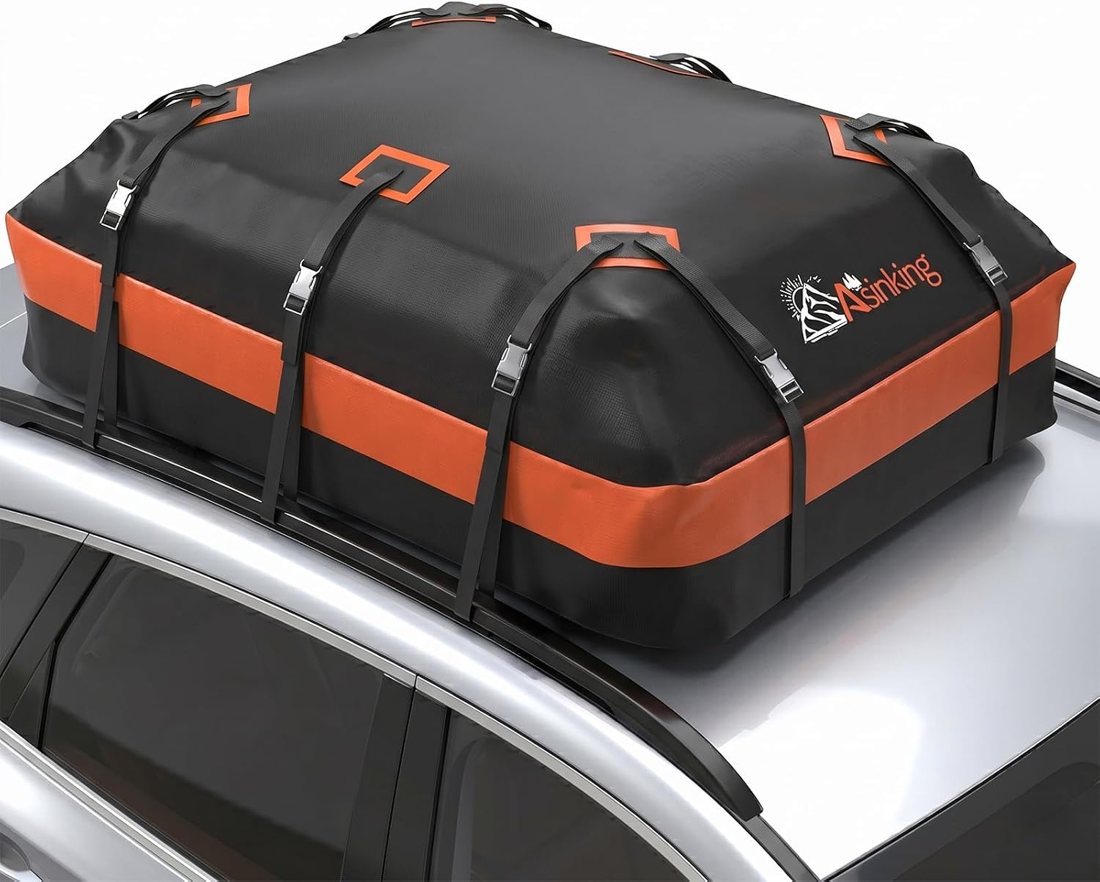
No rack: clip the door hooks to the frames. Rack: thread the metal loop straps around the bars.
Pull every strap snug, lock the zipper, and check it again after the first 20 miles.




▲▲▲▲▲
Went on our Highlander without a rack in about ten minutes. Drove through a full day of rain in Oregon and every sleeping bag came out dry.
▲▲▲▲▲
The 21 took four suitcases and a pack-n-play. The back seat finally had room for the kids and the dog.
▲▲▲▲△
Wind noise was lower than I expected once I pulled the straps tight. Recheck after the first stop, like they say.
▲▲▲▲▲
Hitch bag behind the truck, bikes on the roof. It handled dust, road spray and 1,400 miles.
▲▲▲▲▲
The mat and padded hooks mean no scratches on our new car. That was my big worry and it didn't happen.
▲▲▲▲▲
Folded it back into its little bag after the trip and it lives on a garage shelf until summer.
Stories are composites of the kind of notes drivers send us; names and places are illustrative.

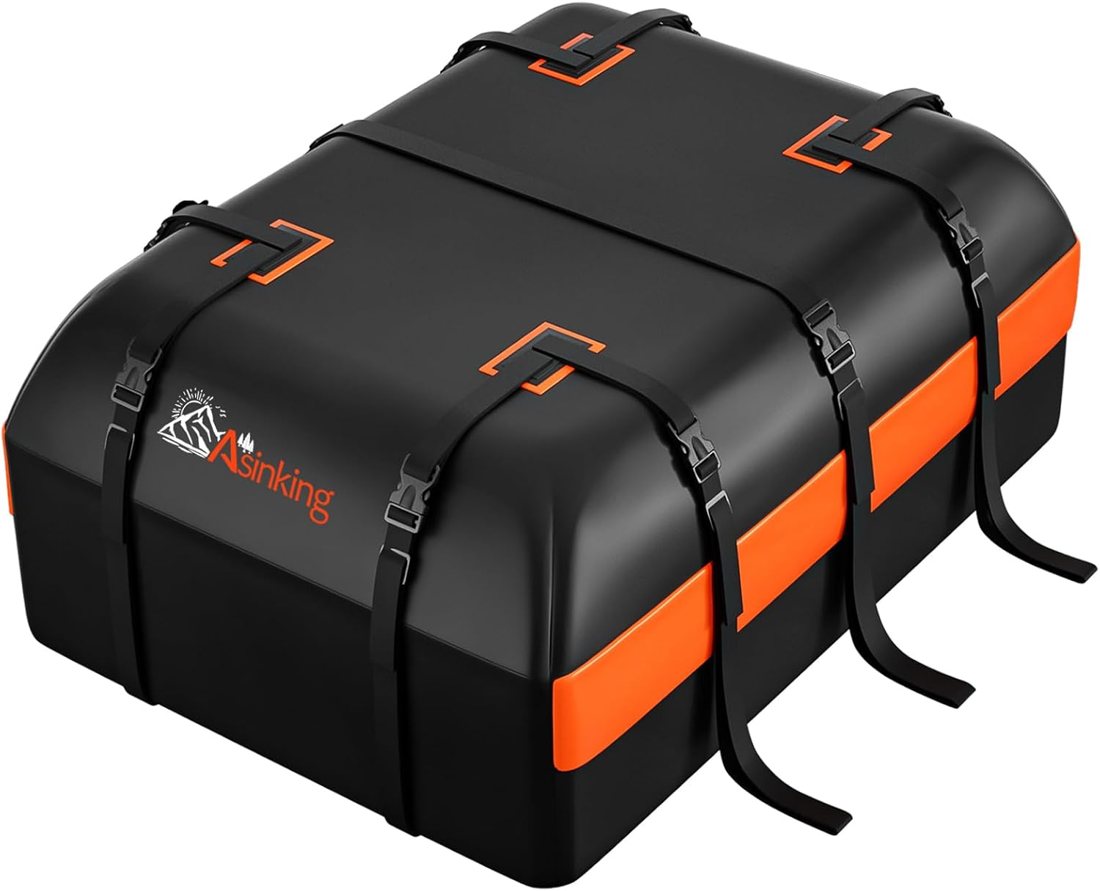
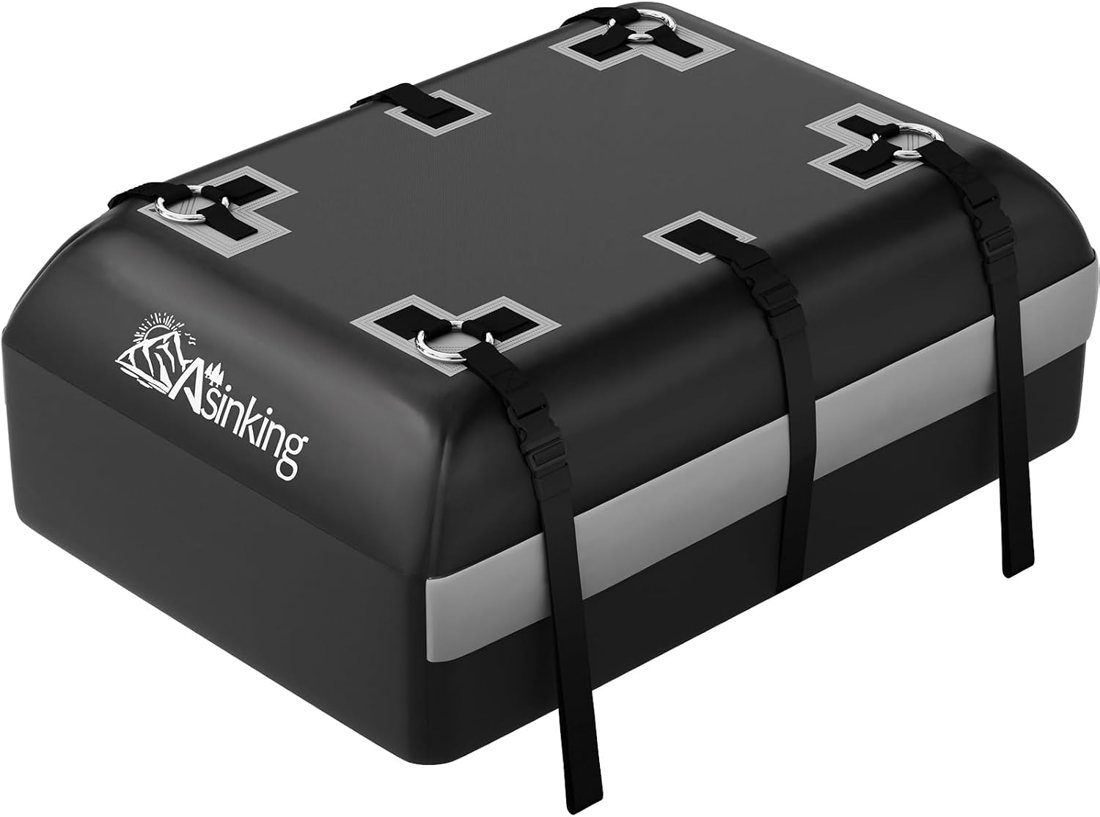
A rooftop cargo bag turns the flat metal above your head into a second trunk. An Asinking car roof bag works with or without a roof rack: on a bare roof, padded door hooks clip to the door frames and the straps run over the top; on crossbars or side rails, metal loop straps wrap the bars. Either way, a non-slip rubber mat goes down first to hold the load and protect the paint.
Size is the first choice. A 15 cubic foot roof bag fits sedans and compacts with a roof longer than 50 inches and wider than 36. A 20 or 21 cubic foot bag suits midsize SUVs, wagons and minivans, and our 22 cubic foot bag is the largest we make. If your roof already carries bikes, a 20 cubic foot hitch cargo bag rides behind the bumper instead.
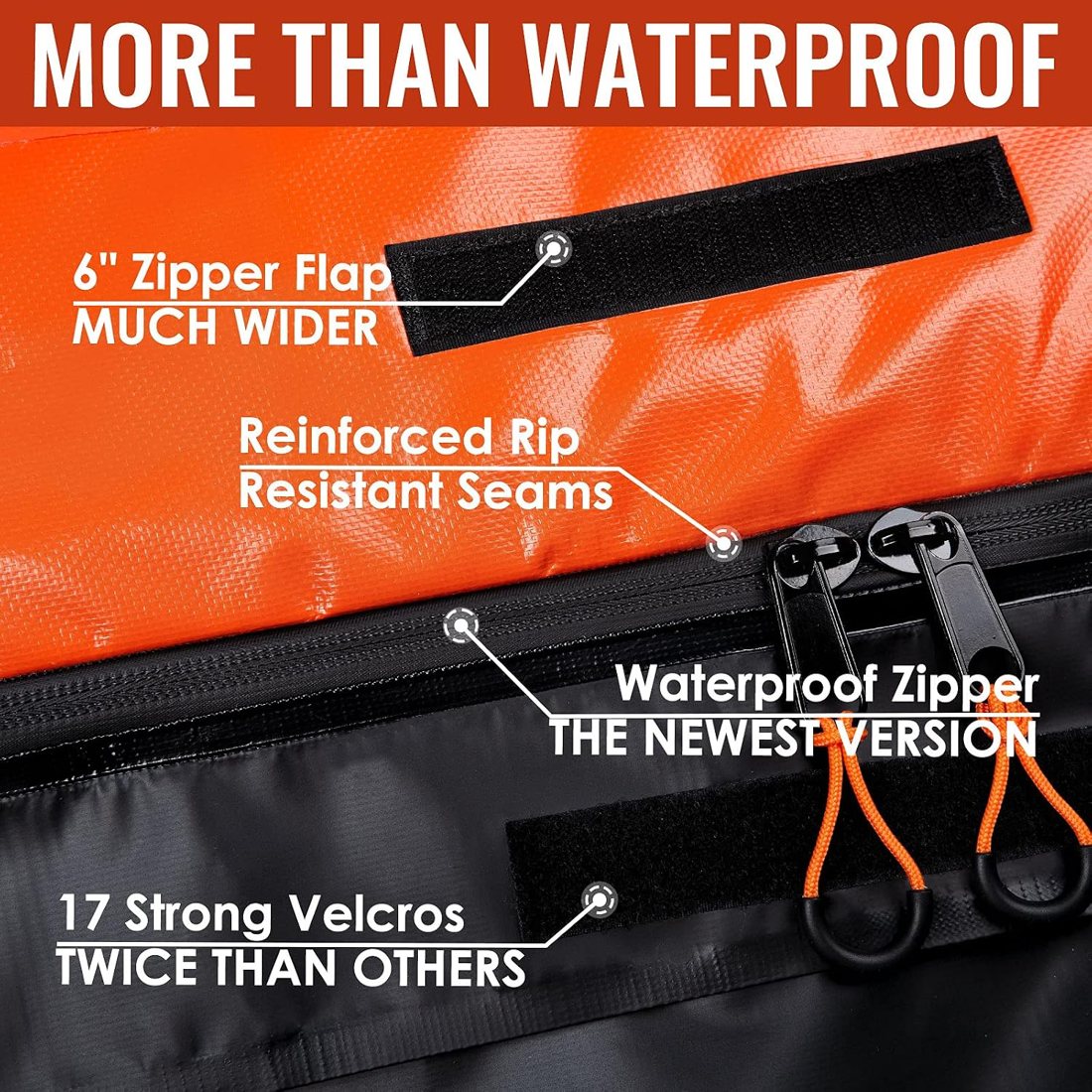
Material is the second. Our Ultimate Series uses 900D double-coated PVC tarpaulin with heat-welded, overlapped seams; the 20 cubic foot Ultimate Version carries an IPX66 water rating. The Everyday Series uses 840D PVC with triple-welded seams and 6-inch Velcro flaps over the zipper. Both keep luggage dry in a downpour, and both fold flat into a storage bag when the trip is over.